
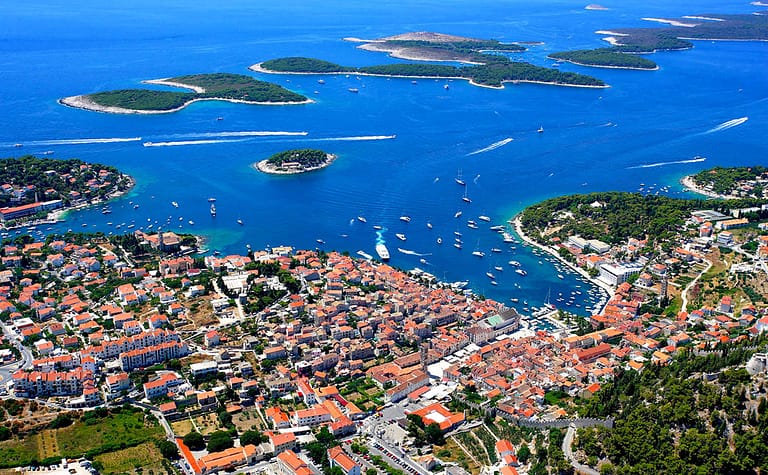
Hvar is home to the most UNESCO heritage of any island in the world. An island with more sun than any other in all Europe, the birthplace of organized tourism in Europe in 1868, and home to the oldest public theatre in Europe, dating back to 1612. An island whose beaches and clear waters are regularly featured in top ten lists, and whose healthy UNESCO Mediterranean Diet is a symbol of its healthy lifestyle. An island fine wine story has attracted the only Master of Wine in all Croatia to make wine from its indigenous grapes.
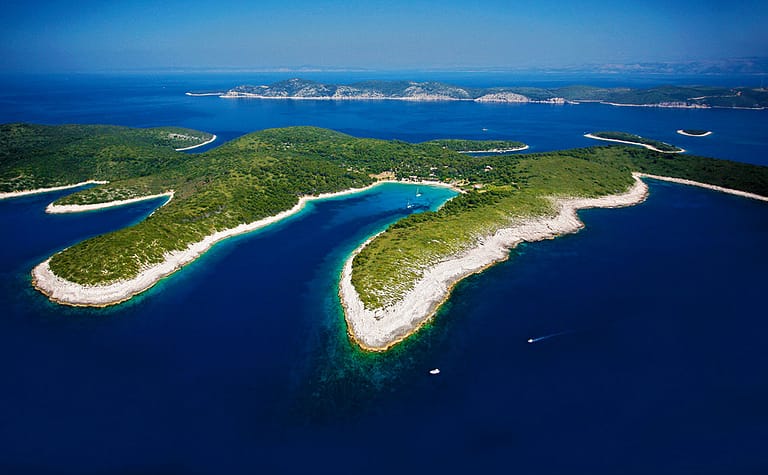
Most visitors to Hvar Town visit the crystal-clear waters, hidden beaches and deserted lagoons of the Pakleni Islands (Pakleni otoci), a gorgeous chain of wooded isles that stretches out immediately in front of the town. Although the name is often translated as ‘Hell’s Islands’, it’s thought to derive from paklina, a pine resin that was once harvested here to waterproof boats.
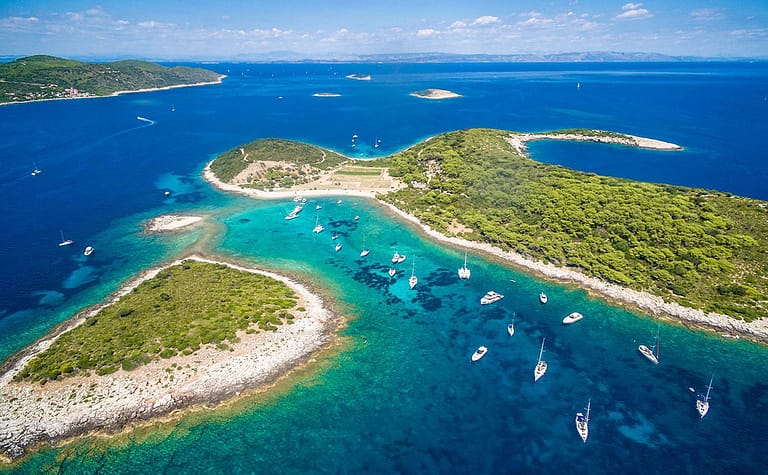
Veli Budihovac (Budikovac) is a small island that lies between islet Ravnik and the southeastern shores of Vis and right next to the islet Mali Budikovac. The exotic blue lagoon of Budikovac with its beautiful pebble beach at the bottom of the bay is a must-see attraction for all visitors on the island of Vis, but also very popular among day visitors from the neighboring islands of Hvar and Brač. Apart from excursion boats, the islet can be visited by boat from neighboring Rukavac on the island of Vis.
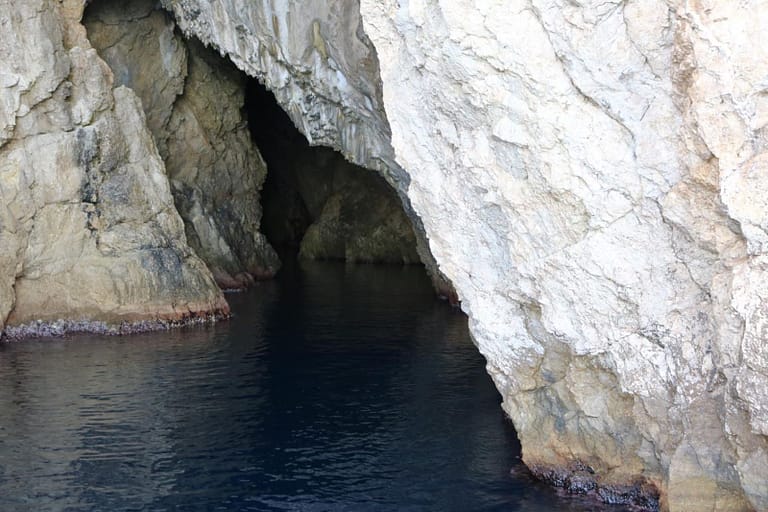
This sea cave with the magnificent 27 metres tall entrance looks like a passage to another world. The Poseidon’s gate leads into the longest semi-submerged sea cave on the eastern side of the Adriatic Sea (160 m). It used to be a home to the only Mediterranean seal, the Mediterranean monk seal (Monachus monachus), after which it was named. Monk seals no longer visit the cave, but the return of the Mediterranean monk seal into the Adriatic Sea is a matter that must not be disregarded, especially having in mind that its population still exists in the nearby Aegean Sea. Having that in mind, the organised visits will take into account the preservation of this valuable habitat. Light sources may not be used in the cave without permission. The same goes for making noise and visiting the small beach at the far end of the cave that was once used by the monk seal to raise their young. This cave, in some places completely dark, is also a habitat of a series of other marine organisms. It is especially important for diurnal migration of species that hide in the dark during the daylight. In the atrium of the cave a big school of sand smelt (Atherina boyeri) can be found, while numerous mysid shrimps of the Hemimysis genus can be found further inside the cave. The rocks are covered by numerous bryozoans, sponges and polychetes of various colours and strange forms and textures. Strictly protected species the purple sea star (Ophidiaster ophidianus) and the cowry (Luria lurida), as well as the photogenic golden coral shrimp (Stenopus spinosus) can be spotted on the rocks.
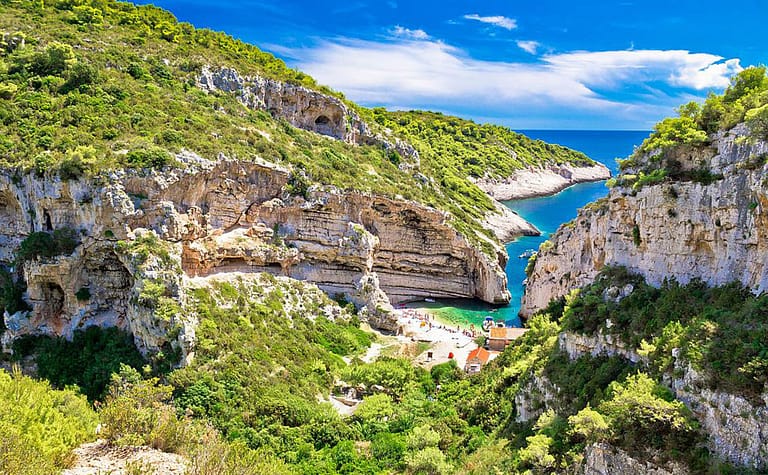
Stiniva beach is hidden at the impressive Stiniva bay at the island Vis – the farthest inhabited island in Dalmatia. The beach is known for its unique natural beauty dominated by high cliffs that surround this hidden gem from the seaside. The natural preserved beauty of the Stiniva beach was recognized in 2016 by Brussels-based tourism organization European Best Destinations that voted Stiniva as the most beautiful beach in Europe.
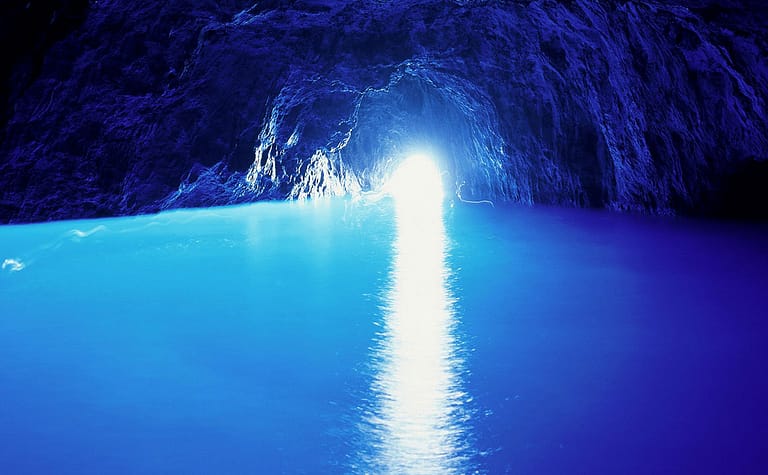
In 1884 the Viennese painter Baron Eugen Ransonnet introduced the Blue Cave on the island of Biševo to the world. His discovery marked the beginning of tourism in Dalmatia, and the Blue Cave has since become a must-see tourist attraction of the Adriatic. The Blue Cave is protected as a geomorphological monument of nature since 1951. A special natural light phenomenon in the cave leaves no one indifferent. Ransonnet wrote that this rich light source gave the rocks, the ores and other submerged objects a silvery-bluish hue similar to the one in the Capri Blue Grotto, directing light from all sides onto the rocky reef, making it look like a castle of a sea deity. The geological survey of the cave in 2019 shed further light on the phenomenon. The bottom of the entrance area of the Blue Cave, as well as the bottom of the big cavern is sandy and light-yellow in colour. In the morning, when the sun shines from the east onto the sandy bottom through the submerged entrance to the Blue Cave, a large quantity of light reflects from the sand (which is lighter than the surrounding rocks of the Blue Cave that have a biogenic overgrowth) and illuminates the interior of the cave. In addition to the submerged entrance, the cave has two more entrances, by sea and by land. The semi-submerged cave is inhabited by numerous organisms living in semi-darkness. During the 2019 research, a total of 119 marine species have been found in the Blue Cave, five of which are strictly protected by the law.